KiwiRail’s new Waltham Maintenance Hub
Photos by Chris Gunn KiwiRail’s new Christchurch maintenance hub at the Waltham yard is steeped in New Zealand’s rail history. The very first steam railway line opened 160 years ago […]
Continue reading
Photos by Chris Gunn KiwiRail’s new Christchurch maintenance hub at the Waltham yard is steeped in New Zealand’s rail history. The very first steam railway line opened 160 years ago […]
Continue reading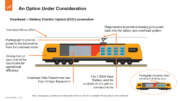
This article sets out KiwiRail’s thinking on decarbonisation, which concluded that battery electric locomotives were the right choice for the future. Building on that, KiwiRail have developed outline plans for moving to electric propulsion for the Auckland-Hamilton-Tauranga lines (the “Golden Triangle”).
Continue reading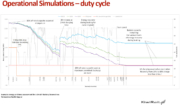
This article summarises an internal KiwiRail study recommending electrification based on a mix of extending overhead line electrification (“OLE”) and battery electric locomotives as the preferred path to decarbonising the KiwiRail mainline locomotive fleet by 2050. The article focuses on the technical rather than the business aspects of the issue.
Continue reading
In 2024, KiwiRail set an ambitious carbon emissions reduction target to reduce gross Scope 1 and 2 carbon emissions by 40 per cent by 2035 against a 2018/19 baseline. This ambitious but feasible target supports Kiwirail’s long-term goal to be net zero carbon by 2050.
Continue reading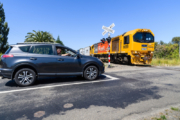
TrackSAFE’s mission is simple: to prevent harm on the railway network. And yet, even after almost twenty years of awareness-raising, education, and advocacy, we still see the same behaviours putting people at risk; shortcutting across tracks, walking along railway tracks, jumping off railway bridges, and perhaps assuming trains can stop.
Continue reading
Historically, New Zealand acquired locomotives for the national railway network from English builders in the 19th century, followed by a swing in favour of American builders, then proceeding to establish its purpose-built workshops to build steam locomotives and rolling stock, as well as utilising several local engineering firms.
Continue reading
Murray King talks to Peter Reidy, back at KiwiRail since August 2022 as CEO, to find out what’s coming down the line for the company.
Continue reading
As a response to the uncertainty surrounding the impact of global warming on New Zealand’s coastal areas, the Ministry of Business, Innovation and Employment launched a five-year research programme in 2018 titled NZ Searise: Te Tai Pari O Aotearoa.
Continue reading
The RNIP is KiwiRail’s response to deliver on the Government’s strategic direction for rail, informed through the New Zealand Rail Plan and Government Policy Statement on Land Transport. The primary direction has been to invest in a resilient, reliable, and safe railway network.
Continue reading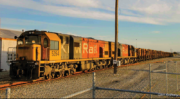
KiwiRail is carefully considering the He Pou A Rangi Climate Change Commission’sreport and is encouraged by the commission’s support for rail, and its recognition of the part rail can play in meeting the country’s commitment to reducing emissions.
Continue reading
In December 2019, the draft New Zealand Rail Plan (‘the plan’) was released by the Government. It outlines the Government’s long-term vision and priorities for the future of the national rail network. This vision includes a national rail network that provides modern transit systems in our largest cities, and enables increased volumes of freight to be moved off the roads and onto rail.
Continue reading
In 2017 KiwiRail began work in earnest on planning for the replacement of its aging Interislander fleet with Project iReX– Interisland Resilient Connection.
Continue reading
The Kaikoura earthquake of 14 November 2016 devastated a large extent of the South Island east coast. It’s been a long road to restoration. Rob Merrifield’s article tells us what that restoration looks like, the challenges faced, and where it stands today. Photo by Glen Anthony.
Continue reading