What recent transport investigations reveal about safety culture
The Transport Accident Investigation Commission has rarely had cause to be this active across multiple sectors simultaneously. Over the past 18 months, TAIC has published or opened investigations involving runaway wagons at a port, two ferry groundings, a foreign ship that lost power twice in New Zealand waters, and a near miss between a freight train and track workers in Dunedin. Taken individually, each is a safety incident with its own circumstances. The pattern they form together is worth examining: not what went wrong in each case, but the conditions that allowed it to.
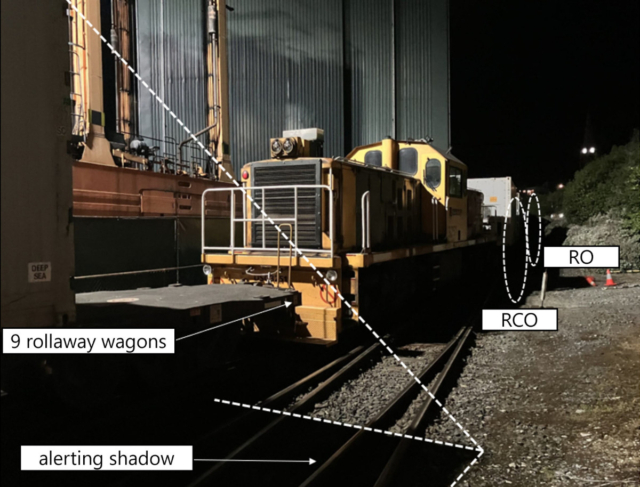
Photos in this article: Transport Accident Investigation Commission
Port Otago: when normalisation takes hold
In the early hours of 23 January 2025, nine wagons at Port Otago’s rail storage facility at Port Chalmers rolled back down a gradient toward a stationary locomotive. The wagons had not been secured correctly. The crew had failed to clearly confirm the task was complete. No one was injured, but the Commission’s report made clear how close the outcome could have been.
TAIC Chief Investigator of Accidents Louise Cook was direct: “A 472-tonne rake of wagons moving at only a walking pace carries enough force to cause serious injury or death.”
What made the findings significant was not the mechanics of the incident but what they revealed about the environment in which it occurred. Training had not adequately covered the air-brake systems and equalisation timing that workers relied on. Rule violations and unsafe practices had become normalised at the facility. Incident reporting was unreliable. The culture had drifted, quietly, until the drift became visible.
Cook’s framing of the broader lesson extends well beyond Port Chalmers: “Depth of training matters because procedure compliance is more robust when workers understand the ‘why’ as well as the ‘do.’ Communication discipline matters in all safety-critical work.”
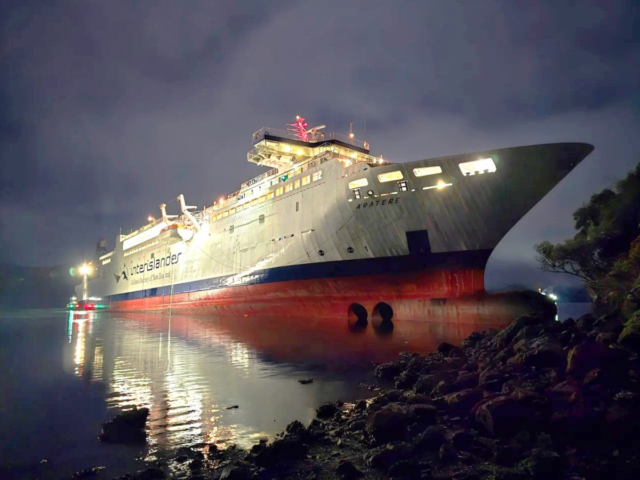
The Aratere: change management as a safety question
In June 2024, the Interislander ferry Aratere ran aground at Titoki Bay near Picton during a freight sailing with 47 people on board. The vessel was refloated the following evening with no oil spills or hull breaches. Its final Cook Strait crossing came in August 2025 after 26 years of service. But the circumstances of the grounding warranted close attention.
Maritime NZ’s investigation found that changes to a safety-critical steering system had preceded the incident. Failures were identified across change-management processes, organisational controls, training and familiarisation, documentation, and bridge resource management. The crew did not have a clear understanding of how the modified systems worked.
In May 2026, Wellington District Court sentenced KiwiRail to a $375,000 fine and $25,000 costs under the Health and Safety at Work Act. Maritime NZ Director Kirstie Hewlett was plain about what the case established: “Steering systems are safety-critical. The crew must have a clear understanding of how the systems work.”
The lesson here sits upstream of the incident itself. Safety failures are not always the product of complacency in the moment. They can be the downstream consequence of decisions made weeks or months earlier, in project and change management processes far removed from the bridge. A change to a safety-critical system that is not accompanied by adequate retraining and documentation creates a gap that only becomes visible when something goes wrong.
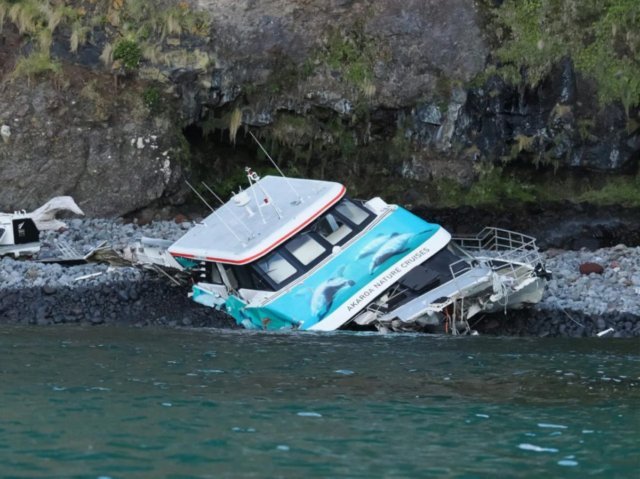
Black Cat and the tourist sector
On 31 January 2026, the 17-metre commercial ferry Black Cat grounded in Akaroa Harbour with 38 passengers and three crew on board. All were evacuated to nearby vessels without injury, but the vessel subsequently listed and was beached. TAIC dispatched a team of investigators to begin evidence collection.
The investigation is ongoing. But the incident is a reminder that passenger vessel safety is not confined to the major operators. Tourist ferries and commercial passenger vessels operate in complex harbour environments, often at the interface of commercial pressure and the expectations of visitors with no maritime experience. The same questions about training, maintenance, and operational culture apply across the sector.
Substandard ships: a regulatory gap
The most systemic concern to emerge from TAIC’s recent work involves foreign-flagged ships in New Zealand waters. In June 2025, the Commission published its report on the container ship Shiling, which had lost power on two separate occasions in New Zealand waters in 2023 — once while departing Wellington Harbour, and once entering the Tasman Sea. The ship’s history of deficiencies was well-documented before either incident occurred.
TAIC Chief Investigator Naveen Kozhuppakalam was unambiguous: “Substandard ships represent a real risk to crew, New Zealanders, and coastal environment. The Shiling had a history of deficiencies and it’s virtually certain the ship wasn’t seaworthy.”
The Commission recommended that Maritime NZ be given legislative authority to ban certain ships from New Zealand waters, comparable to powers held by the Australian Maritime Safety Authority. That legal authority does not currently exist. As a small market at the end of long global shipping routes, New Zealand has limited leverage over vessel standards of foreign operators. The Commission also called for improved tow-salvage capability and a stronger maritime incident response strategy.
What connects them
The incidents span different sectors, operators, and vessel types. But the threads running through them are consistent: training that covers procedure without building understanding; cultures where unsafe practices have become unremarkable; change management that does not account for safety-critical consequences; and a regulatory environment that, in some areas, lacks the authority to act on known risks before something goes wrong.