Budget 2026 reshapes the transport landscape
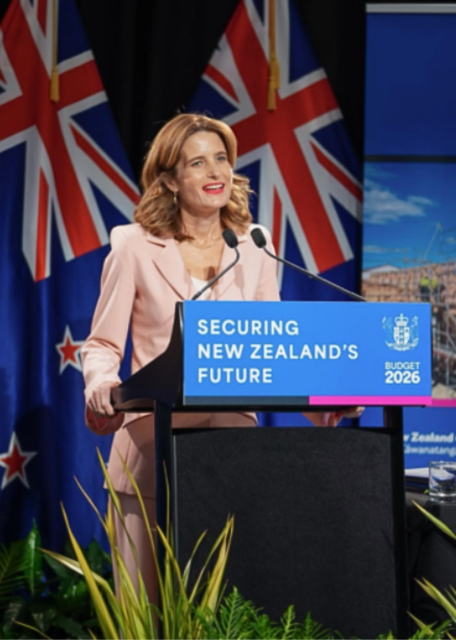
Minister of Finance Hon Nicola Willis
The biggest story in Budget 2026 for the logistics and transport sector isn’t a dollar figure. It’s a structural change that will reshape how transport policy is made in New Zealand for years to come.
From 1 July 2026, the Ministry of Transport ceases to exist as a standalone agency. In its place sits a new super-ministry: the Ministry for Cities, Environment, Regions, and Transport, absorbing not just transport but the former Ministry for the Environment, the housing policy function of the Ministry of Housing and Urban Development, and the local government functions from the Department of Internal Affairs. It is one of the largest machinery-of-government changes in recent memory.
For the logistics and transport sector, the implications are significant. Transport policy will now sit alongside resource management, urban planning, environmental regulation, and regional development inside a single agency. The intent, as signalled by the Government, is to break down the silos that have historically slowed major infrastructure projects, where a road or rail corridor might require separate engagement with multiple ministries before a shovel hits the ground.
Resource Management Reform, funded at $77.7 million in this Budget, is part of the same agenda. Finance Minister Nicola Willis pointed to the scale of change the new planning system will deliver: “This includes a new, centrally managed platform for planning, consenting and compliance, so things aren’t still done 78 different ways across 78 different councils.”
For major logistics infrastructure, like ports, freight hubs, road and rail corridors, that standardisation could mean faster, more predictable consenting. The sector will be watching closely to see whether the new ministry can deliver on that promise.
Whether the broader structural change works will depend heavily on how the new ministry is structured internally and where transport sits within it. Officials who have historically been across transport policy exclusively will now be working in a much broader portfolio context. For organisations seeking to influence freight and logistics policy, understanding the new ministry’s internal architecture will be an early priority.
Civil Contractors New Zealand welcomed increased government infrastructure investment and increased recognition of the critical role infrastructure plays in creating thriving, resilient communities.
Chief Executive Alan Pollard says clarity in funding channels and the prioritisation of a sustainable pipeline of infrastructure investment is a good step. This clear and stable funding for infrastructure, he adds, would provide communities with much-needed assets, and valuable certainty.
“In particular, a new package of transport resilience projects to protect transport networks from the impact of severe weather and natural hazards was welcome, and something contractors had long called for, as was funding for rail, hospital and school infrastructure.”
Transporting New Zealand Chief Executive Dom Kalasih said investments in the Cambridge to Piarere Expressway, state highway resilience, additional strategic fuel reserves, and contingency funding for fuel price support demonstrated the Government was maintaining focus on long-term infrastructure and supply chain resilience.
“The Government has shown a continued commitment to addressing New Zealand’s infrastructure deficit and delivering fit-for-purpose transport infrastructure despite tight fiscal conditions. That’s good news for productivity, safety, and keeping New Zealanders in employment.”
Record rail investment
Alongside the structural change, Budget 2026 makes the largest rail investment commitment in recent years, allocating just over $1.4 billion for rail activity across the network. Willis pointed to the headline commercial investment: “The Budget also puts aside just over $1 billion for KiwiRail’s network improvement programme.”
In the Estimates, that breaks down to $609 million for the Rail Network Investment Programme (covering track renewal and network resilience) and a separate $592.7 million equity injection into KiwiRail Holdings to fund capital expenditure on the national freight network.
The Lower North Island Rail Corridor (the Wellington commuter and freight network) receives $46.7 million in specific funding. This is a network that has faced significant reliability challenges and deferred maintenance. For freight operators who move goods between the Manawatū, Hawke’s Bay, and Wellington, improved reliability would have tangible supply chain benefits.
Maritime Union National Secretary Carl Findlay says the confirmation of funding ensures a positive future for publicly owned, rail enabled Cook Strait ferries.
“We have consistently argued that rail-enabled ferries are an absolute backbone in New Zealand’s domestic freight system,” says Mr Findlay.
“Shifting freight by rail and sea just makes sense as our recent report on transport fuel efficiency demonstrates. It’s good to know that someone in this government understands the urgent need for a long-term focus on economic resilience.
“Winston Peters should be commended for his political skills in wrestling this money from coalition partners who are wedded to the trucking industry and a Finance Minister who has been openly hostile to sensible supply chain infrastructure.
“In an otherwise lacklustre and visionless budget, this funding stands out as an investment in New Zealand’s future.”
Roads: strengthen before they fail
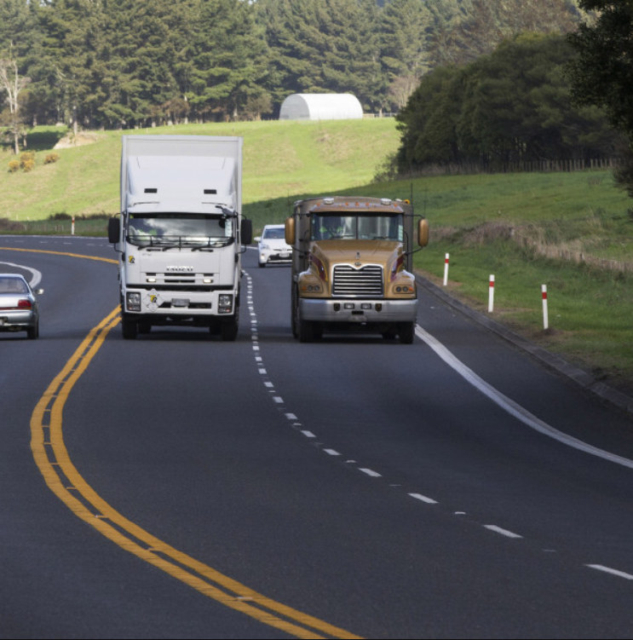
The National Land Transport Programme is funded at $3.97 billion, the largest single appropriation in Vote Transport. Willis used it to articulate a shift in the Government’s approach to roading: “The Government is making the choice to strengthen roads before they fail, rather than repeatedly paying to rebuild them afterwards.”
That framing has practical implications for freight operators. A focus on preventive maintenance over reactive repair should mean fewer emergency closures and more predictable transit times on key freight routes.
Budget 2026 also includes new funding for the Waikato Expressway extension. Willis described it as “this critical freight and economic link”, which will extend the expressway from Cambridge to the Tauranga turnoff. This will close a gap on one of New Zealand’s most significant freight corridors connecting Auckland, the Waikato, and the Bay of Plenty.
Coastal shipping gets its own fund
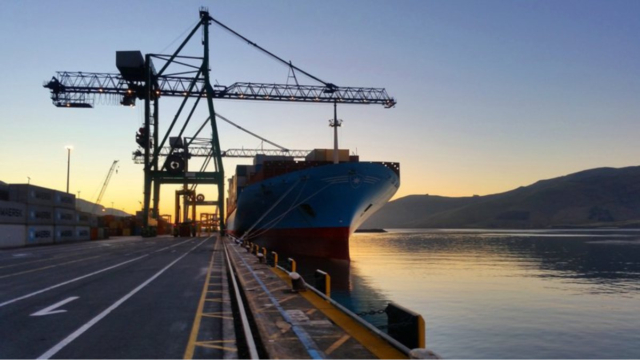
One of the more notable new items for freight operators is the Coastal Shipping Resilience Fund, allocated $14.5 million. This is new money, not a continuation of existing spending, and it signals a shift in government thinking about coastal shipping as a strategic freight asset.
New Zealand’s exposure to supply chain disruption, reinforced by the COVID-19 pandemic and subsequent severe weather events, has elevated coastal and short-sea shipping on the policy agenda.
The resilience fund suggests the government wants to maintain viable coastal shipping capacity as an alternative freight route, particularly for bulk freight between the major ports. How the fund will operate, and whether it supports operators, infrastructure, or both, will become clearer as implementation details are released.
Severe weather recovery and EV infrastructure
Budget 2026 continues funding for road network recovery from the 2026 severe weather events. For freight operators in the affected regions, progress on specific routes remains the critical question (best directed to the NZ Transport Agency as recovery work proceeds).
The Government has also allocated $56 million for electric vehicle charging infrastructure, focused on highway and inter-regional routes. For fleet operators considering electric freight vehicles, closing the coverage gaps on key freight corridors is a practical prerequisite to transition.
What it means for the sector
Budget 2026 is a substantial investment in transport infrastructure, with close to $5 billion across rail, roads, and new funds like coastal shipping. But the investment comes alongside a governance change that is at least as significant as any spending line.
The new Ministry for Cities, Environment, Regions, and Transport is, in effect, an experiment in integrated infrastructure planning. If it works, the logistics and transport sector should find it easier to engage with government across the full lifecycle of a project (from land use planning through to construction). If it doesn’t, the risk is that transport gets lost inside a much larger policy agenda.