Fuel crisis accelerates transport rules overdue for reform
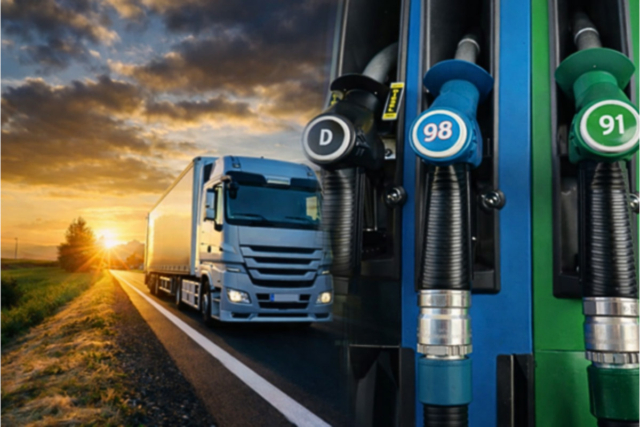
In May 2026, the Government announced a set of immediate and phased heavy vehicle rule changes under the National Fuel Response Plan, explicitly designed to help operators move more freight per trip and reduce diesel consumption. Transport Minister Chris Bishop was direct about the link. “Fuel prices are already putting pressure on households and businesses, which is why this work matters,” he said. “We need to balance benefits with safety and network impacts, but there are sensible changes we can make that will lift productivity without compromising standards.”
The changes sit alongside a broader Land Transport Rules Reform Programme launched in late 2025, covering seven workstreams across an 18-month timeline. But where that programme moves at a structural pace, the fuel crisis has created a separate, faster track — and exposed just how much productivity has been left on the table by rules that have not kept up with the fleet.
What changed immediately
Permanent changes under the Fuel Response Plan took effect in May: permit requirements were removed for 50MAX vehicles and for returning empty rental trucks between depots. Class 2 licence holders gained the ability to drive heavier electric buses.
More significant measures are staged to fuel response phases. At Phase 2, over-dimension vehicles will be temporarily permitted on motorways and toll roads currently closed to them, shortening routes and cutting fuel use. At Phase 4, the highest alert level, weight limits will temporarily increase by 4 per cent for high productivity motor vehicles (around two additional tonnes per truck) and by 10 per cent for 50MAX vehicles, lifting the cap to 55 tonnes.
Transporting New Zealand chief executive Dom Kalasih welcomed the direction but called for the Government not to wait. “Trucking companies and their customers are already experiencing a fuel price crisis,” he said. “We estimate that a two-tonne payload increase for high productivity motor vehicles using five-axle trailers could save over 6 million litres of diesel annually. That would mean real fuel reductions for the freight companies transporting essential goods like milk, fuel, logs and produce.”
The Heavy Vehicle Package: wins and frustrations
Consultation on the Heavy Vehicle Package and Lane Use Package ran through March 2026, ahead of the Fuel Response Plan announcement. The latter package addressed how road space is allocated between vehicles, cyclists, and pedestrians (such as lanes on roads, footpaths, and shared paths).
The package produced some concrete results for the bus and coach sector: drivers travelling under 60 kilometres per hour must give way to buses pulling out from stops; Class 2 licence holders can drive electric buses up to 22,000 kilograms; and overseas heavy vehicle licence holders can convert their licences by sitting tests or completing approved courses.
But the broader reaction from the heavy vehicle sector was pointed. Bus and Coach Association Chief Executive Delaney Myers described the VDAM consultation as so limited that what officials had framed internally as “low-hanging fruit” was, in her words, “so low it’s on the ground decomposing.” The BCA, along with all other heavy vehicle user associations, wrote jointly to the NZTA Board Chair to put their frustration on record. The industry, Myers said, needs “ambition from the government and movement towards meaningful change, targeting the things that will make a difference and listening to industry, rather than further rounds of soothing noises and consultant reports.”
VDAM
The frustration runs deepest on axle weights. Urban public transport buses saw their axle limit increase from 8.2 tonnes to 9 tonnes in 2018. At the time, NZTA stated that “axle weight limits of 10 tonnes will be established with the next VDAM rules to align with most modern buses”. That commitment remains unfulfilled. Coaches and the rest of the bus fleet remain at 8.2 tonnes on a twin-tyred single axle.
New Zealand’s axle weights, mass limits, height and length settings lag behind comparable jurisdictions. The full VDAM review has been flagged for mid-2026. Transporting New Zealand has described recent NZTA regulatory amendments as “tinkering around the edges” and emphasised that any changes require proper collaboration with affected stakeholders and adequate time for operators to adjust.
Modernising road user charges
Running alongside the vehicle rules reform is a separate overhaul of how road user charges are administered. The Land Transport (Revenue) Amendment Bill was reported back by the Transport and Infrastructure Committee on 18 May, unanimously recommended to pass. The bill separates NZTA’s regulatory function from its retail role and creates a new class of approved commercial RUC providers, opening the market to technology firms, retailers, energy companies, and telecommunications providers with existing billing infrastructure and customer relationships.
For existing RUC users, the practical changes are straightforward: physical licence displays will no longer be required, monthly billing will be available, and combined fees are expected to be lower. The longer-term objective is to bring petrol vehicles into the RUC system, removing their reliance on fuel excise duty at the pump. Cabinet has not set a date for that transition and will consider the question in 2027, once the market for third-party RUC solutions has had time to develop. The Ministry of Transport’s consultation on the draft regulations is open until 12 June 2026.
Tightening the other end of the rope
The same week the Government eased truck weight limits, Parliament passed a piece of legislation that barely made the news. The Regulatory Systems (Transport) Amendment Act 2026 introduces two provisions with significant implications for anyone running a licensed transport business.
New section 30LA requires director approval for any person who takes or assumes control of a licensed transport service. That approval is personal, so it cannot be inherited or transferred. When the controlling person changes, existing approvals are voided and the process starts again. The days of passing a transport licence ticket down the hall are over.
New section 30UA gives the Director of Land Transport new power to immediately suspend a transport service licence for significant health and safety reasons. Triggers include: an unsafe vehicle operating under the licence; a driver breaching work time requirements; a vehicle operating over dimension or mass limits; or a driver with significant impairment operating a vehicle. The suspension takes effect immediately by notice in writing.
Notably, the normal procedural requirements in Subpart 5 do not apply to an immediate suspension under 30UA. There is no advance warning, and the suspension takes effect the moment the notice arrives. Operators can challenge the decision, but they stop operating first.
Previously, equivalent immediate suspension powers applied to rail and aviation operators. The Act brings road transport into line and does it with teeth. Overloading, in particular, can now end a business overnight.
The window
The fuel crisis has created conditions for rule changes that might otherwise have taken years to clear the system. The immediate heavy vehicle changes are a partial vindication of arguments the freight sector has made for decades. The RUC overhaul addresses a different kind of accumulated lag: a road funding system built for an earlier era, being rebuilt to support a future where distance-based charging replaces the pump for all vehicles.
Whether the window stays open long enough to address the deeper structural issues, including a full VDAM overhaul and a defined timeline for the petrol vehicle transition, will depend on whether the Government maintains momentum once the immediate pressure eases.
The risk the sector has seen before is that urgency produces incremental change, and incremental change becomes a reason to defer the harder work.