Eight patterns shaping transport and logistics performance in practice
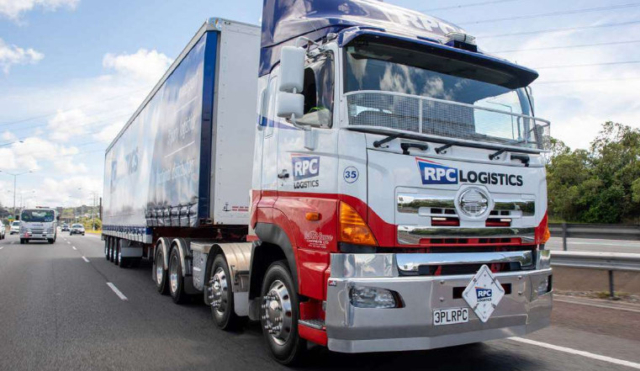
Most logistics problems don’t start in an obvious way. They build slowly, and by the time they are noticed properly, they have usually been in the system for a while.
Small disruptions tend to appear first as routine exceptions rather than failures. A supplier misses a cut-off, a delivery lands outside its window, inventory is temporarily out of position. Warehouses adjust in real time to keep freight moving. Individually, these are absorbed without concern. It is only when they repeat that performance starts to shift.
By the time something shows up at delivery level, the causes are usually long upstream. Planning decisions, procurement behaviour, inventory positioning, and how well information moves between parties all play a part.
That is the reality in most supply chains. Transport is just where the issue becomes visible.
And in recent years, that visibility has become sharper. Demand is less predictable. Costs don’t settle for long. Freight flows are more uneven. In New Zealand, weather disruption and driver availability add another layer, but the underlying challenge is the same elsewhere too.
Transport performance is really a reflection of how well the system is working as a whole, not just what happens on the road.
Some of the recurring patterns in day-to-day operations are as follows.
Planning is already out of date when the week begins
Weekly planning still exists in a lot of operations, even though the operation itself no longer behaves in weekly cycles.
Demand shifts midweek, promotions change overnight, suppliers miss production timing, and inventory moves through the system without the downstream impact always being fully visible until later.
As a result, the plan quickly becomes something people work around rather than something they actually follow. You see it in the operation first: warehouses swing from quiet to overloaded, transport utilisation becomes uneven, and dispatch teams step in constantly just to keep things stable.
In most cases, the issue is not that planning is wrong. It is that it is too slow. By the time decisions are made, the situation has already moved on.
The better operations do not try to perfect the plan. They reduce the distance between what is happening and what gets adjusted. That alone removes a significant amount of friction.
Visibility is still not shared in any meaningful way
Most organisations have decent internal systems now. The problem is no longer inside the business itself, but between businesses.
One party is working off updated data, while another is still relying on what they had yesterday. A shipment is technically visible, but there is often no shared view of when it will actually arrive or how reliable that timing is.
As a result, teams fall back on workarounds. Emails, calls, spreadsheets, constant checking and re-checking because the system does not fully reflect what is happening on the ground.
This is still a normal part of daily operations in many supply chains.
Technology has improved tracking and exception reporting, and artificial intelligence (AI) is starting to support forecasting and earlier identification of issues. But none of this resolves the more fundamental problem of inconsistent inputs across organisations.
If the underlying data is not aligned, all that happens is that disagreement becomes faster and more visible.
The organisations that are getting real value from these tools usually have something far less visible in place first: discipline around how information is created, maintained, and shared across the network.
Inventory grows where confidence drops
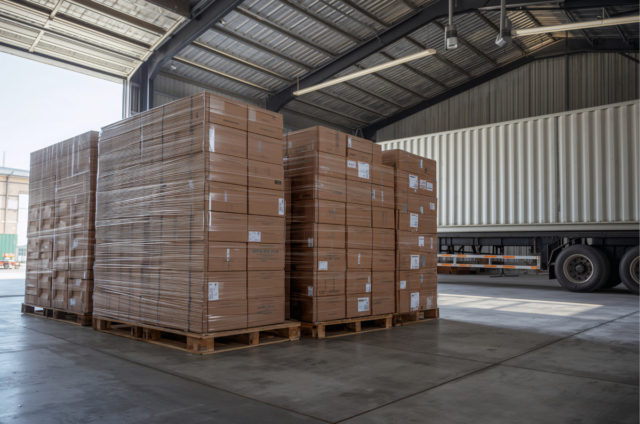
Inventory rarely increases for the reason people think. It is usually not driven by demand, but by uncertainty in the system.
When suppliers become less reliable, safety stock increases. When freight timing becomes harder to predict, additional buffer is introduced. Procurement responds by ordering earlier or in larger quantities to reduce exposure. Over time, warehouses end up holding the combined effect of those decisions.
Stock builds gradually, not because demand is growing, but because confidence in timing has eroded.
The cost impact shows up first. Working capital increases, slow-moving stock accumulates quietly, and space becomes tighter. Yet service levels do not necessarily improve, because the underlying issue was never volume. It was coordination.
A recurring challenge is that transport and inventory are still treated as separate decisions, managed in different parts of the business and optimised in isolation.
In practice, they operate as one system. The organisations that perform better tend to recognise this earlier and manage both together, rather than dealing with the consequences later.
Most late deliveries start before transport is involved
When a delivery is late, transport usually gets the first call, but that is often not where the delay actually started.
Orders are released late, freight is not ready, paperwork is incomplete, and loading plans change at short notice, which means the driver often arrives only to wait.
That waiting time then becomes the issue that flows through the rest of the day’s schedule.
In tighter networks, there is very little room for this kind of inefficiency. In New Zealand especially, capacity constraints mean even small delays can quickly spread through the system.
The operations that perform consistently well tend to focus just as much on what happens before the truck arrives as on the transport movement itself.
That area is often underestimated.
Warehouse and transport are not separate systems, even if they are managed that way
Warehouses and transport teams are still often run independently, with warehouses focused on productivity and picking rates, and transport focused on cost and delivery performance. Both can look fine in isolation, but the system between them tells a different story.
If warehouse execution falls behind, trucks end up waiting. If transport timing is inconsistent, inbound flow becomes disrupted. During peak periods, these issues do not stay separate and tend to amplify each other quickly.
It is not unusual to see both functions meeting their individual Key Performance Indicators (KPIs) while overall customer performance is still under pressure.
The stronger operations avoid treating them as separate parts of the business. They manage them as a single flow, and that shift changes how decisions are made in practice.
Resilience has moved from theory to reality
Recent disruption events have made supply chain vulnerability far more visible in practice rather than in theory.
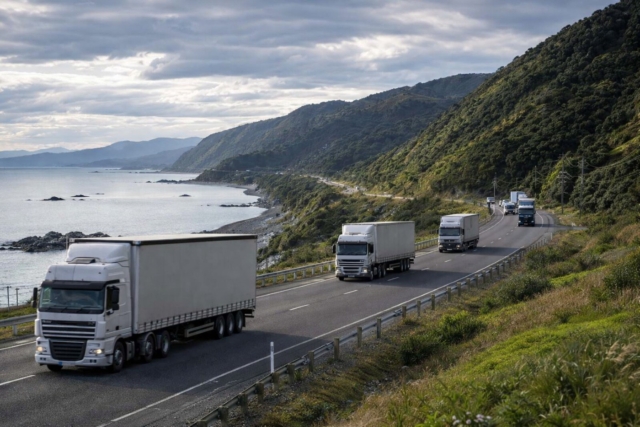
Cyclone Gabrielle is a clear example. Road closures across key regions disrupted freight movement for days, and recovery was not immediate, taking longer than many organisations initially expected.
Most organisations still tend to think about resilience in terms of inventory buffers, holding more stock as a way of absorbing disruption when it occurs. Transport alternatives, in contrast, are often only considered once something has already failed.
That thinking is starting to shift, with more discussion around routing flexibility, coastal shipping, and rail. These are not positioned as direct replacements for road transport, but as additional options when parts of the network are compromised.
The real issue is not whether disruption will occur, but how long operations can continue to function when it does.
A lot of stability still depends on manual effort
Many logistics systems look more stable than they really are, largely because experienced people are constantly adjusting things behind the scenes.
Schedules are changed manually when needed, warehouse supervisors override system outputs to keep things moving, and dispatch teams often rely on spreadsheets or informal updates when the system is not fully aligned with operational reality.
It works in practice, but it is inherently fragile.
The underlying risk is that a significant amount of knowledge sits with individuals rather than being embedded in the process. When those people leave, or when volumes increase beyond normal levels, the gaps in the system become visible very quickly.
AI and automation are increasingly being introduced into this space. They can improve consistency and responsiveness, but they do not fix weak underlying processes. In some cases, they make those weaknesses more visible.
Cost pressure keeps reshaping decisions
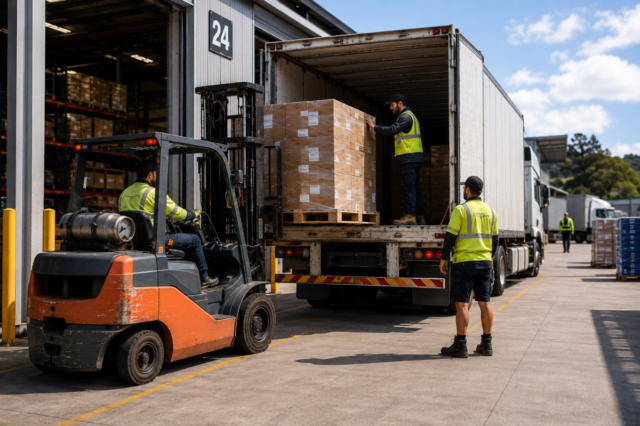
Cost pressure is constant now and does not really ease between cycles. Fuel, labour, equipment, and infrastructure costs continue to move, while at the same time service expectations keep increasing.
As a result, decisions are often made under sustained tension rather than in stable conditions.
Inventory is reduced to release cash, freight is consolidated to improve utilisation, and investment is delayed until conditions appear clearer.
But the system is highly connected, and this is where pressure begins to accumulate.
A saving in one area often creates strain elsewhere. Lower transport cost can lead to warehouse congestion, reduced inventory can increase service risk, and tighter schedules can reduce flexibility when conditions change unexpectedly.
The strongest supply chains are not those that optimise each function in isolation, but those that remain stable when conditions are not perfect.
Looking beyond the disruption
None of this is really about technology, even though technology will continue to play a growing role in planning and decision support.
The fundamentals remain unchanged. Reliable planning, clean and consistent information, effective coordination between teams, and decisions made early enough to prevent small issues from escalating.
Most disruption is not the result of a single major failure. It comes from the gradual accumulation of small decisions across the system, which only becomes visible once performance starts to drift.

Alan Win is the Founder and CEO of Middlebank Consulting Group, a supply chain and value chain management consultancy. Founded in 1998 in New Zealand, Middlebank Consulting Group (MCG) has been operational in Australia since 2003, in Singapore and India since 2016, in the USA since 2022, and recently in the Middle East. Alan is an accomplished professional with over 45 years of practical management and consulting experience in the fields of logistics, supply chain, and value chain management. His extensive expertise encompasses various areas, including value chain management outsourcing (3PL & 4PL) and risk-based inventory management.
Alan has extensive experience in practical logistics, supply chain and value chain management, having spent 17 years in line management roles for several leading international companies before moving into consulting in 1992. Since commencing a consulting career, Alan has worked internationally (in a dozen countries) on some 200+ projects, across multiple industries and organisations. His work has focused on strategic development of logistics and supply chain operations as well as detailed implementation of transport, warehousing, inventory management and systems improvement projects. In addition to consulting, Alan is a Professor of Practice at the University of Canterbury, and Honorary Professor at the University of Sydney and institutions across India and Asia.