Diesel shock tests bus and coach sector resilience
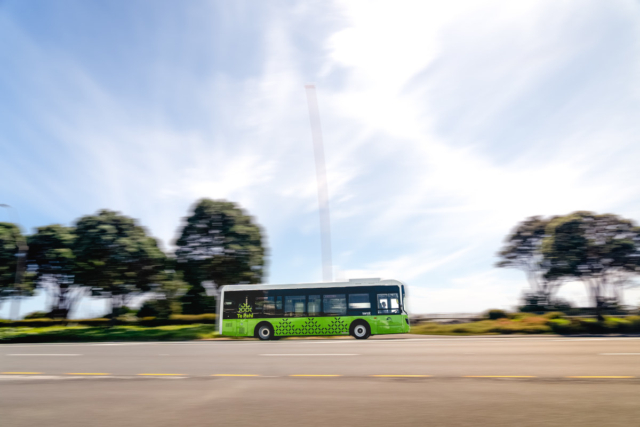
Rising diesel prices linked to the Iran conflict are creating uneven pressure across New Zealand’s bus and coach sector, with the sharpest strain falling on operators exposed to spot-priced commercial work rather than contracted public services.
Delaney Myers, Chief Executive of the Bus and Coach Association (BCA), says the impact depends heavily on the type of operator and the structure of its revenue.
For bus companies running contracted services for public transport authorities or the Ministry of Education (MoE), diesel cost increases are partly cushioned by existing contract mechanisms. Those contracts include quarterly price adjustments, meaning higher fuel costs are recoverable over time. The protection is not immediate, however.
“There’ll be a lag, so there are cashflow challenges, but they will be compensated,” Ms Myers says.
That distinction matters. In practical terms, contracted operators are under pressure, but not necessarily facing the same direct margin erosion as businesses operating in the tour and coach market.
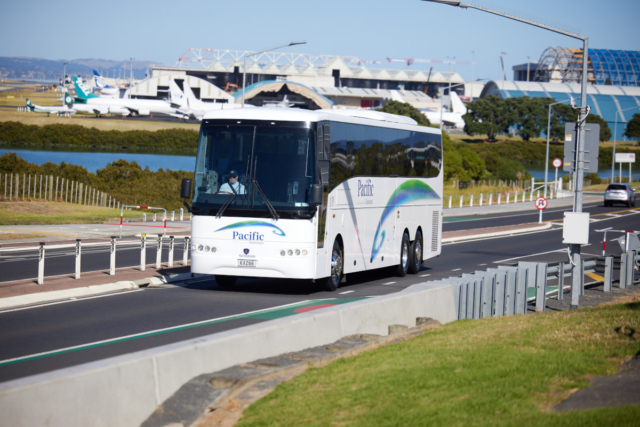
For tour and coach operators, the position is more exposed. Many have already priced work in advance, often on assumptions that no longer hold. Diesel is a major input cost, and where prices rise sharply after a job has been sold, operators can find themselves absorbing the increase.
Ms Myers says some are now “working at a loss”, particularly where commercial relationships make it difficult to reopen agreed pricing.
In some cases, operators have been able to approach regular clients and negotiate. In others, competitive pressure is limiting that option. The result is a commercially awkward choice between protecting margin and protecting customer relationships.
The concern is amplified by the sector’s recent history. New Zealand’s coach and tourism businesses were among the transport operators hardest hit by COVID-era border closures and lockdowns. Some exited the market altogether. Others stayed in operation by taking on debt or depleting reserves.
That leaves parts of the industry entering another external shock with limited balance-sheet strength.
“This is really unfortunate, because it’s come at a time where people had just started to feel really good about the rebound in the tourism sector,” Ms Myers says.
The tourism dimension is significant beyond the operators themselves. Coach services are a core part of the visitor economy, particularly for regional itineraries, group travel and packaged tours. Pressure on that capacity therefore has wider implications for the quality and resilience of New Zealand’s tourism offer.
Ms Myers argues that, if conditions worsen materially, the Government may need to consider targeted business support rather than blunt changes to fuel taxes or road user charges. Her position is not that the bus and coach sector should be treated in isolation, but that relief may be justified where businesses are economically important and clearly exposed to a shock beyond their control.
It is also a risk-management issue. Ms Myers says operators under financial stress inevitably prioritise immediate non-negotiables such as fuel. The danger is that pressure then flows through to other obligations.
“Road user charges and keeping up with your maintenance schedules and adherence to the work time rules for driving hours, those are the kind of things that have the potential to slip,” she says.
That is not a claim of systemic failure, but a warning about where sustained financial strain can lead if left unmanaged.
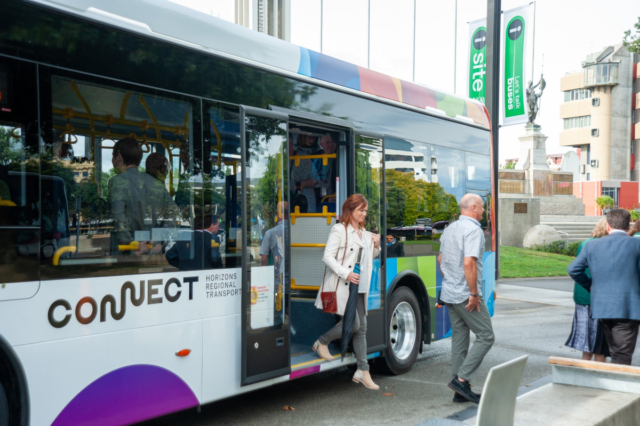
BCA is now talking with agencies including NZ Transport Agency Waka Kotahi, the Ministry of Business, Innovation and Employment, the MoE, and client organisations, while also engaging alongside tourism bodies. Ms Myers says one lesson from COVID is that relationships across government and industry are more open and better developed than they were previously.
That may prove valuable if volatility persists. The sector used about 6.5 million litres of diesel in February alone, underscoring both its exposure to fuel markets and its economic weight.
Tranzit Group, New Zealand’s largest family-owned transport and tourism company, sits across all those segments. Celebrating 100 years in business in November 2025, it operates a fleet of 3,000 vehicles across public transport, school bus and SESTA services, tourism, events, charters, and rentals.
For its contracted work, including public transport services for regional councils and school bus runs for the Ministry of Education, contracts include indexation mechanisms linked to NZTA methodology that provide partial recognition of fuel cost movements. Transport Minister Chris Bishop announced in May that NZTA would encourage contracting parties to move to monthly fuel price adjustments, reducing the lag between a cost increase and its recovery.
Tranzit’s fleet of more than 200 electric buses adds another layer of protection for its urban services. Across a typical month, those buses prevent the use of close to 500,000 litres of diesel. If fuel supply becomes constrained, that capacity means public transport services can continue running in communities where diesel-dependent operators would face more acute uncertainty.
The tourism and charter side of the business faces different pressures. Diesel costs have doubled since the conflict began, and where rates were already agreed for work completed toward the end of the 2025/26 peak season, Tranzit absorbed those increases.
“These cost pressures are being felt right across the transport and tourism sector, including airlines, cruise operators, ferries as well as bus and coach services, so it’s important any response is measured, fair, and reflects the realities of the current environment,” says Jenna Snelgrove, General Manager of Tranzit’s Coachlines, InterCity and Tourism Division. Tranzit is working through pricing conversations with key clients and has reminded its driving teams of fuel-efficient techniques to reduce consumption where possible.
Regional aviation under pressure
The diesel shock has not been confined to road transport. New Zealand’s regional airlines, many operating on thin margins with limited ability to pass costs on quickly, have been among the hardest hit.
Air Chathams, which serves some of the country’s most isolated communities, has seen its jet fuel bill roughly double, from around $500,000 per month to more than $1 million. The airline responded with significant flight reductions: 45 per cent fewer services to Whakatāne, 22 per cent to Whanganui, and 10 per cent to Kāpiti. Chief executive Duane Emeny put the position plainly. “There’s no real point in operating the services, if we can’t even cover the direct cost,” he said.
The Government responded in April with a $30 million loan facility for regional airlines affected by the fuel crisis. The first tranche allocated around $22 million across three operators: Air Chathams received $17.2 million to refinance debt, Sounds Air received $4.5 million for fleet upgrades and debt refinancing, and Island Air received $252,000 for fleet maintenance. Golden Bay Air had received a $1.1 million loan earlier, in February.
Associate Transport Minister James Meager, who announced the package alongside Shane Jones, acknowledged the unique vulnerability of these operators. None were facing immediate closure, he said, but the longer the fuel crisis persisted, the more that assessment would need revisiting.
The impact runs beyond the airlines themselves. These services connect communities with no viable road or rail alternative. Reductions in frequency or capacity are not simply a commercial inconvenience. For patients, students, freight, and tourism operators in affected regions, they represent a real access problem.
Budget 2026, delivered on 28 May, set aside $450 million in a contingency reserve for further fuel-related support if prices remain elevated. Finance Minister Nicola Willis was direct about the reasoning: “In a situation where fuel prices stay higher for longer, or they spike, I want to be able to look New Zealanders in the eye and say we are ready to take further responses if needed, timely, temporary, targeted responses, and so that’s what that fund is about.”
A monthly fix for cashflow
For bus and ferry operators running contracted public transport services, the existing contract mechanism offers some protection against fuel price increases, but the standard quarterly adjustment cycle was creating cashflow strain at a time when costs were moving fast.
NZTA responded by introducing interim monthly fuel price adjustments across its public transport, construction, and maintenance contracts. Transport Minister Chris Bishop described it as a practical intervention. “Rising fuel prices are putting pressure on Kiwi businesses, including the public transport operators keeping our buses and ferries running,” he said. “This is a practical, common-sense change. It doesn’t increase the overall cost of contracts, but it does smooth cashflow and reduce risk.”
The change applies to bus and ferry operating contracts co-funded through the National Land Transport Fund with terms exceeding 12 months. Monthly interim index values are published following the release of Statistics New Zealand data, and use of the monthly values is optional alongside the continuing quarterly process. NZTA has indicated it will return to quarterly-only adjustments once prices stabilise.
The practical effect is straightforward: operators no longer have to carry the full weight of a fuel price spike for a quarter before relief flows through their contract payments. The total they receive does not change. The timing does.
Lessons from across the Tasman
While New Zealand’s response has focused on contract flexibility and targeted loans, Australia has taken a different approach. In late April, Fair Work Australia handed down the Road Transport Contract Chain Order Fuel Cost Recovery — 2026, a mechanism allowing road transport operators to formally negotiate cost recovery with the businesses that engage them.
The order followed diesel prices in Australia reaching $3.10 per litre in late March, then climbing to $3.30 per litre in the weeks that followed. The federal government responded by cutting the fuel excise by 26.3 cents per litre from 1 April, effectively halving the rate, and increasing the diesel fuel rebate.
The cost impact analysis prepared by Dr Kim Hassall for the Fair Work Australia hearings set out the numbers plainly. For a typical small articulated fleet, an 80 per cent rise in fuel prices translated to a 25.5 per cent increase in total operating costs, with fuel’s share of the cost structure rising from 30 per cent to 55 per cent. For owner-drivers, who operate as price-takers with limited ability to pass costs on, the picture was worse: without any relief, a cost impact of 34 per cent; with the excise reduction and fuel credit increase, still close to 25 per cent. As the report noted, that is “still horrendous unless these prices can be passed on.”
The Contract Chain Order gives operators the legal basis to have that conversation. It allows them to formally enter negotiations to recover incurred costs and establish revised trip rates, a process that previously had no formal structure in many arrangements.
New Zealand has no equivalent mechanism. For owner-drivers and small operators here who face the same exposure but lack formal contracts with escalation provisions built in, that gap is worth noting.