How freight certificates could support emissions reduction
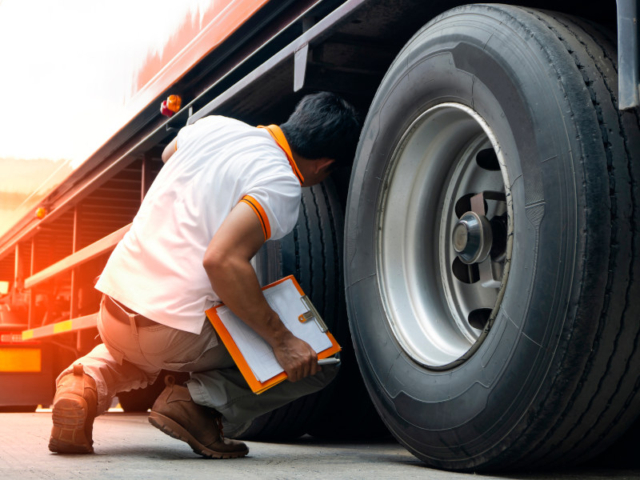
Designed to operate as a market-based instrument, Low Emmissions Freight Certificates could allow freight providers who invest in low-emissions transport to sell certificates that represent emissions savings, while freight receivers could buy them to offset the carbon footprint of their supply chains. PHOTO: Getty Images
A recent report from the Energy Efficiency and Conservation Authority (EECA) and the Sustainable Business Council is setting the groundwork for a new mechanism to support decarbonisation in New Zealand’s freight sector: Low Emissions Freight Certificates (LEFCs).
Designed to operate as a market-based instrument, LEFCs could allow freight providers who invest in low-emissions transport to sell certificates that represent emissions savings, while freight receivers could buy them to offset the carbon footprint of their supply chains.
The concept is not new globally, but in the New Zealand context, this may be the first serious step toward building a functioning certificate-based freight decarbonisation system.
The LEFC Demand Report assesses both supply and demand for certificates, the price points that might make the system viable, and the barriers that still need addressing before a national system can be implemented.
Freight makes up a significant portion of New Zealand’s transport-related emissions. While electrification and alternative fuels are advancing, many freight operators still rely on traditional diesel-powered fleets, especially for long-haul and heavy goods movement.
The LEFC model is designed to accelerate the adoption of low-emissions vehicles and support emissions tracking by creating a voluntary market. In that market, freight providers who operate low-emissions vehicles (such as electric trucks, hydrogen fuel cell vehicles, or even conventional trucks running on drop-in biofuels) would generate tradeable certificates.
These could then be sold to freight buyers looking to offset the carbon impact of their freight activity. The system would work in tandem with Scope 3 emissions reporting frameworks, which increasingly require organisations to account for carbon generated in their own facilities and value chains.
Emissions reporting frameworks are increasingly becoming a core component of corporate climate accountability. Under the internationally recognised Greenhouse Gas Protocol, organisations classify their emissions into three categories: Scope 1 (direct emissions from owned or controlled sources), Scope 2 (indirect emissions from purchased electricity), and Scope 3, which includes all other indirect emissions that occur in the value chain.
For freight-dependent businesses, Scope 3 typically covers emissions from third-party transport providers, which can make up a significant share of their total carbon footprint.
Because companies don’t directly control these emissions, they must find credible ways to measure, reduce, or offset them, especially as investors, regulators, and customers increase pressure for transparent and complete sustainability disclosures.
LEFCs are designed to provide one such tool. By purchasing certified emissions reductions from freight operators who use low- or zero-emissions vehicles, a company can demonstrate that it is actively managing its Scope 3 freight emissions. This can help support compliance with emerging climate disclosure standards, including New Zealand’s climate-related disclosures regime.
In short, LEFCs offer companies a market-based way to reduce the carbon impact of their supply chains, even if they don’t directly own or operate freight fleets, by allowing them to support, and account for, lower-emissions transport elsewhere in the system.
One of the central questions posed by the report is whether New Zealand’s freight industry would actually use these certificates. The answer, according to interview findings, is cautiously optimistic. Most organisations involved in the study supported the idea of a certification system and expressed interest in participating either as certificate generators or buyers.
However, support came with important caveats. Many companies said they would need to justify the additional cost of certificates to internal procurement or finance teams. Some said they would only be willing to pay if certificate costs could be passed on to customers. Others suggested they might only participate if there was a co-benefit, such as improved sustainability credentials or easier compliance with emissions disclosures.
These mixed responses reflect the financial pressures already present in the freight and logistics sector. In a cost-competitive market, even a small price premium for carbon reduction can be a difficult sell.
To explore pricing, the report modelled a range of carbon abatement cost scenarios: how much it costs to avoid one tonne of CO₂ equivalent (tCO₂e) using different types of low-emissions freight vehicles. The estimates spanned from $200 to $800 per tCO₂e, depending on the technology used.
Battery electric vehicles were found to offer the lowest abatement costs in many scenarios (around $500/tCO₂e), especially for urban and mid-range trips. Drop-in biofuels for diesel trucks, while more compatible with existing infrastructure, offered the lowest overall costs per kilometre driven, but still presented challenges around supply, reliability, and long-term cost stability. Hydrogen fuel cell vehicles (FCEVs) remained at the higher end of the cost spectrum (up to $1,000/tCO₂e) due to fuel costs and infrastructure requirements.
A commonly referenced target price for certificates in the report was $50–$100/tCO₂e, a range that several freight receivers said they would consider reasonable, especially when linked to Scope 3 goals.
To put this in perspective, a certificate priced at $100/tCO₂e would add around 0.5 per cent to the retail cost of a washing machine delivered 500 kilometres; 0.1 cents per litre to the cost of supermarket milk transported 400km; and 0.4 per cent to the delivery cost of a kitchen appliance shipped 1,100km.
The report concluded that these marginal increases, while noticeable, are likely manageable for many businesses, particularly if certificate costs are shared among multiple supply chain participants.
The short answer to whether there is enough supply to launch a scheme is yes, at least for a pilot phase. As of April 2025, there were around 58 heavy goods vehicles (HGVs) classified as battery electric, 22 FCEVs, and 550 HGVs running on drop-in biodiesels or other low-emissions fuels.
These numbers remain small relative to the national diesel freight fleet, but the report notes that it is sufficient to demonstrate proof of concept, especially if the system begins with a targeted registry and marketing campaign.
Importantly, the registry would need to account for vehicle verification, fuel source authenticity, and accurate emissions accounting, all of which requires robust data standards and a trusted operating body.
While interest is strong, the report identifies several key barriers to wider adoption of LEFCs. High upfront vehicle costs remain a major obstacle; electric and fuel cell trucks are significantly more expensive than diesel equivalents, often by hundreds of thousands of dollars.
Charging and fuelling infrastructure remains patchy, and concerns persist about payload limitations and range for low-emissions vehicles. Without government endorsement or regulatory linkage, some companies may see the system as voluntary and therefore low priority.
Stakeholders also want assurance that any registry or certificate scheme would be independently audited and not open to greenwashing. Several interviewees highlighted the need for clear rules and reporting frameworks.
And finally, many businesses expressed concern that they’d be unable to recover certificate costs without affecting their competitiveness, particularly in sectors with narrow margins. The report does not prescribe a fixed pathway forward but suggests that a targeted pilot could help overcome market hesitancy and demonstrate proof of concept.
For such a pilot to work, several conditions are likely necessary: clear system boundaries (e.g. defined vehicle classes, pre-approved fuels); transparent pricing and emissions calculations; verified participants and a central registry; and communication support to help businesses understand how certificates can enhance their Scope 3 emissions reporting or align with climate targets.
While many companies said they would prefer direct decarbonisation, investing in low-emissions fleets themselves, the report acknowledges that LEFCs could play a complementary role, especially when technology limitations or cost barriers prevent immediate fleet turnover.
On one hand, LEFCs are a signal that market-based decarbonisation is coming to freight, mirroring what’s already occurring in energy and aviation. On the other, it highlights that New Zealand’s freight sector is still early in its low-emissions transition.
The LEFC report is a reality check: there is real interest in lowering freight emissions, but willingness to pay will hinge on pricing, simplicity, credibility, and alignment with broader business goals.
Chief Executive of Transporting New Zealand, Dom Kalasih says that the certificate system would enable freight companies and their customers to make meaningful strides towards decarbonisation without compromising productivity.
“Transporting New Zealand supports this initiative from the Sustainable Business Council and DETA. It recognises that freight customers have a key role to play in helping transport companies invest in lower emission technologies.”
“These low emission freight certificates allow freight customers to pay a premium for a lower emission product. This will allow further investment in lower emission technology by freight operators.”
Mr Kalasih also highlighted practical energy efficiency measures that all road freight companies could investigate.
“While we’re excited about the progress on low emission freight certificates, we also want people to know that you don’t have to drive a battery electric or hydrogen vehicle to make a difference,” Mr Kalasih said.
Transporting New Zealand acknowledges the many barriers to decarbonising road freight, not least high capital costs and availability of charging infrastructure.
“Upgrading New Zealand’s fleet to low and zero-emissions vehicles will be costly in the short-term, and most operators cannot make that upfront investment right now. But there are actions that all operators can take.
“Route optimisation, backloading, regular maintenance and utilising larger, higher capacity trucks are all proven methods to increase fuel efficiency and reduce emissions.”
Mr Kalasih said Transporting New Zealand are also planning to launch a heavy vehicle decarbonisation resource at the end of October and would release more details shortly.