CRL’s numbers game – the scale and shape of transformative change
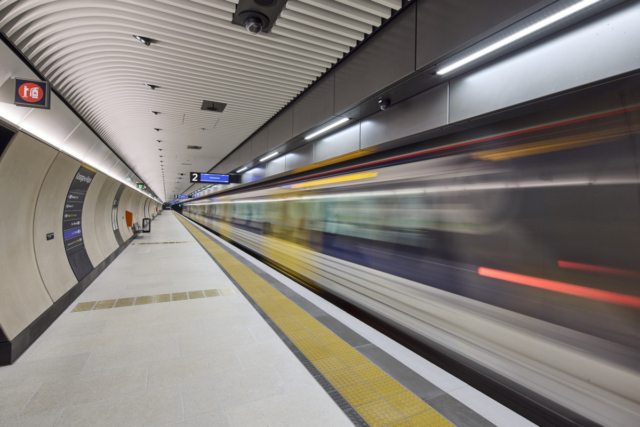
Auckland’s trains carried more passengers in the first seven days of the City Rail Link than in any week in the network’s history, with 528,007 boardings recorded between 13-19 September. PHOTO: CITY RAIL LINK
The City Rail Link (CRL) is New Zealand’s largest transport infrastructure project ever, and after a decade it was officially opened on 11 September 2026 with services for the public beginning on Sunday 13 September 2026.
Completing such a project and starting a new era for rail and public transport in Auckland through the CRL is a numbers game.
For starters, Auckland Council estimates 21,000 or more city centre residents, 17,000+ students and 37,000 existing jobs will now be within a 12-minute walk of CRL’s two new underground stations. Further out, CRL will double the number of people living within a 30-minute train journey of the city centre. Add in the hard yards to achieve that – over 28 million work hours to build CRL, site inductions for CRL staff, suppliers and subbies exceeding 14,000 and a workforce of more than 2,200 at construction peak – and it is clear CRL’s scale will have a game changing impact not only on the way people travel but on Auckland city itself.
CRL together with a revamp of Auckland’s public transport and KiwiRail’s huge upgrade of the wider rail network will maximise the new line’s benefits.
Patrick Brockie, Chief Executive of City Rail Link Ltd (CRL Ltd), the organisation responsible for project delivery, says CRL will “launch changes as profound as the impact on the city as the Auckland Harbour Bridge did when it opened back in 1959.”
Bottom line
Stacey van der Putten, Chief Executive of Auckland Council’s transport organisation, Auckland Transport (AT), adds that the bottom line for Aucklanders is a great one.
“CRL means shorter, more frequent and convenient commutes, easier one-seat trips into the city centre and across Auckland to see friends and whānau, while places like Eden Park for a sports game or a concert become more convenient destinations.”
Auckland Council’s Chief Economist, Gary Blick, says CRL will improve access to jobs and services in the city centre, particularly around the underground Te Waihorotiu and Karanga-a-Hape Stations.
“Improved accessibility makes these locations more attractive for employers, workers and investment. There are already examples of private sector development around the new stations.”
CRL is 3.45 kilometres long, and its underground twin tunnels unlock Auckland’s city centre by connecting the previously dead-end Waitematā (formerly Britomart) Terminus downtown with Maungawhau (formerly Mt Eden Station). Karanga-a-Hape Station is the country’s deepest with platforms 33 metres below street level, and Te Waihorotiu in the central city will become the country’s busiest.
Rail’s revival
Putting Auckland rail underground was first suggested around 100 years ago with what was called the Morningside Deviation or Morningside Tunnel. Costs derailed the proposal and decades of missed rail opportunities followed, usually in favour of building roads.
Rail’s revival began in the early 2000s due, in part, to increased road traffic congestion, and the return of trains into the city centre for the first time in 70 years with the opening of Britomart Transport Centre (now Waitematā Station), rail electrification, and a rise in public transport patronage.
Auckland Council and Auckland Transport began CRL construction in 2016. Following a decision by the Government of then Prime Minister John Key, the Crown became the project’s joint funder with Auckland Council. In 2017, they established CRL Ltd, a Crown entity with an independent chair and board.
“We were building something on a scale not seen in this country before – a huge, complex and challenging underground railway under the heart of a big city and a very busy motorway connection known as Spaghetti Junction,” says Mr Brockie. “Our immediate neighbours during heavy construction were business owners and residents.”
The three main contracts out of six signed to deliver CRL were:
- C1: which included the weight transfer of Waitematā Station, occupying the heritage-listed Chief Post Office, onto new foundations for tunnel box construction in the basement
- C2: 350 metres of cut-and-cover tunnel boxes under Albert St to the site of the Te Waihorotiu Station.
- [Separately, CRL tunnels were built through the foundations of a downtown office and shopping complex being developed between C1 and C2]
- C3: CRL’s biggest contract delivered by the Link Alliance to design, procure and deliver the mined section of tunnels between Maungawhau (previously Mt Eden) and Te Waihorotiu Stations, station construction, systems installations across CRL and connecting CRL with the wider Auckland network.
Mr Brockie says that in many ways, CRL’s impact extends well beyond Auckland city boundaries.
“From day one, the project was determined to be an exemplar for other large-scale projects to follow – lifting the bar across many construction disciplines that will benefit wider New Zealand.”
He says one of the most important and rewarding legacies was the project’s partnership with eight Tāmaki Makaurau/Auckland iwi.
“Our Mana Whenua Forum produced stunning station designs based on the city’s cultural past that help make CRL a world class railway. The Forum helped drive employment and business opportunities for Māori and Pasifika communities and, critically for us, played a key role in the wellbeing of our very diverse workforce.”
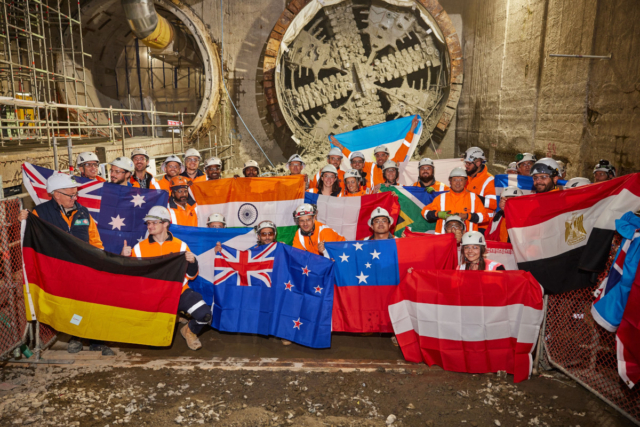
Lifting the bar, Mr Brockie adds, included “out-of-the-box” innovation like shifting Waitematā Station on to its new foundations and then designing new machinery and materials to build tunnels in the basement – “a fabulous example of the project’s positive ‘can-do’ attitude!” The list also includes job upskilling; health and safety processes to ensure workers got home safely which were adopted by overseas companies; the use of new technologies like the installation of high-speed 5G communications technology in the tunnels and new stations; international recognition for environmental protection.
“Altogether, a pretty impressive tick list of legacies that will endure for generations.”
Mr Brockie acknowledges, however, that alongside the gains, there were challenges:
- Covid’s long shadow created 271 work-day restrictions, affecting the timing of work programmes
- Two funding reviews led to CRL’s cost rising to $5.493 billion. The first focused on the original cost and changes to project scope including the extension of platforms for longer trains and adding an entrance at Beresford Square at Karanga-a-Hape Station. The second reflected the pandemic’s impact on work restrictions and CRL’s domestic and international supply chain.
- Heavy construction at the C3 contract’s three station sites became a disruption and access issue for neighbouring businesses. Support available through the project was reinforced by a Targeted Hardship Fund established by the Government and Auckland Council. Over five years the Fund paid out in total $10.7 million to 72 individual businesses.
Heavy construction ended last December, and work focused on an exhaustive and detailed testing and commissioning phase of all of CRL’s systems to ensure they worked as they should.
KiwiRail, AT and CRL Ltd agreed the programme was complex and elaborate involving months of staged testing of CRL infrastructure, systems and people. KiwiRail also had to ensure a brand new CRL could interact seamlessly with existing rail assets including the 100-plus year old Purewa and Parnell tunnels and a freight network which is unique in sharing the same tracks as Auckland’s metro network.
Test and test again became the project’s mantra. Test covered track work, overhead power lines, lighting, station lifts and escalators – at 43 metres long, New Zealand’s longest escalator has been installed at Karanga-a-Hape Station. Fire detection and suppression systems, ventilation, security cameras, communications, and station ticket machines and gates all also needed to be tested both individually and together.
Large-scale emergency testing with CRL Ltd, Link Alliance, AT, KiwiRail and Auckland One Rail – which operates the metro services – working alongside emergency services was also completed. Involved were realistic, high-pressure scenarios across stations and tunnels, including fires, onboard incidents, and evacuations. Some exercises included hundreds of volunteer passengers to replicate real-world conditions.
The readiness programme also included testing timetables across the network, training drivers, train managers, station staff and controllers and Auckland Transport buying an additional 23 trains, bringing the total to 95 commuter trains to support expanded services.
Rail network updated
Underpinning CRL construction is KiwiRail’s modernised metro rail network.
With significant funding from the Crown ($2.4b), KiwiRail’s investment has transformed a network designed and built decades ago for low-speed, low-frequency freight services rather than the level of use associated with a busy, modern metro.
“We’ve brought the 150-year-old network up to modern standards,” says Bevan Assink, KiwiRail’s Chief Metro Officer.
“We’ve delivered large new infrastructure projects to support CRL – 19km of electrification from Pukekohe to Papakura, the Third Main Line and upgrades to infrastructure from Wiri to Quay Park (Auckland’s port), and the Western Power Feed and new stations in southern Auckland are complete, with another power feed and one more station in southern Auckland to follow.”
Mr Assink says that globally most metros do not share networks with freight. In Tāmaki Makaurau/Auckland, however, rail is mixed use – a busy passenger metro co-existing with freight services.
One way KiwiRail is addressing this complexity is the construction of the 6.5km-long Third Main Line – an additional track that allows freight and metro services to bypass each other at the busiest part of the southern line that manages 1500 passenger and 380 freight services weekly.
A network-wide maintenance upgrade is also a huge part of KiwiRail’s preparations for CRL. The five-year Rail Network Rebuild (RNR) programme, completed last January, rebuilt the foundations, drainage and tracks from the bottom up. The invasive civil works and track programme literally lifted rails to dig underneath, as well as replacing rails and sleepers.
Mr Assink says RNR brought the network up to a modern standard capable of supporting the CRL timetable and placing rail at the centre of public transport and improving network reliability.
The facts and figures demonstrate the scale of the job; 80km of rail replaced, 30km formation, 70km drainage, 40km sleepers, 50km ballast, 40-plus turnouts, four new crossover locations, 15 on-tracking pads.
“We’ve estimated it to be over a decade’s work in just under five very busy years.”
Mr Assink says it was “a no brainer” to also futureproof the network ahead of forecasted population growth in southern Auckland.
“We’ve got ahead of the game by extending electrification 19km between Papakura and Pukekohe for cleaner and faster journeys and built three new stations along this section ensuring that public transport networks are factored into the big picture for economic growth in the south.”
CRL’s new owners
On 30 June 2026, CRL Ltd achieved ‘Practical Completion’ – the end of CRL Ltd’s contractual obligation to successfully construct and commission CRL’s lines, tunnels, stations and systems. CRL was handed over to new owners: Auckland Transport will own the stations and KiwiRail the tunnels and track infrastructure.
A completed CRL had eliminated an historic bottleneck caused by trains having to terminate at dead-end Waitematā Station – limiting the number entering and leaving the city and impacting on rail’s overall efficiency. With Waitematā now a through station, the future will look much different, says Ms van der Putten.
“At peak times, trains will run every four to five minutes through the central city, with initial capacity for up to 19,000 passengers an hour through the city-centre stations.”
AT has overhauled rail routes to focus on CRL and the quicker and more frequent access it gives people to central city locations. Many bus routes across the city are being improved to create easier connections with trains.
“Better public transport for all,” says Ms van der Putten. “Reshaping travel across Auckland will encourage greater use of public transport – trains, buses and ferries – and, in time, reduce road traffic congestion, lower transport-related carbon emissions, and allow Auckland to grow and prosper.”
More options
Auckland Council’s Gary Blick believes that the City Rail Link will support Auckland’s long-term productivity by improving access to jobs and services while supporting more intensive use of land around stations across the network.
“CRL gives people more options for reaching jobs and services across the city. Shorter travel times effectively bring more opportunities within reach, helping people access a wider range of jobs, and improving the matching between workers and employers.
“Combined with proposed changes to planning rules, CRL creates opportunities for new homes near stations. This gives more people a choice to live closer to jobs, services and transport connections, while making better use of infrastructure Auckland has already invested in,” Mr Blick says.