A fire, a Minister, and the first train through CRL
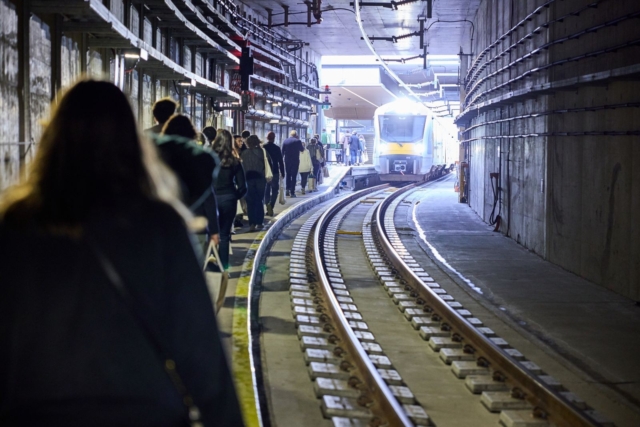
Auckland One Rail chief executive Martin Kearney rode the first train through the City Rail Link. Then a fire at Waitematā stopped everything.
Martin Kearney was on the 4:57 from Ōtāhuhu, the first service through the City Rail Link, when wiring at Waitematā caused a small fire.
The Auckland One Rail team put it out and even cleaned the platform so services could restart quickly. As a precaution, every underground station was evacuated so platforms didn’t overload with new passengers.
“Briefing the Transport Minister on the spot regarding the fire was not something I had expected to be carrying out so you can imagine what was going through my head,” says Kearney.
Trains were back to schedule by 8.30am. “At the same time, I had a media standup, and even with such a challenging start to the day, you could see we had something to be proud of.”
In the first week, patronage rose around 50 per cent, back to pre-Covid levels. Punctuality and reliability are both in the high 90s.
On day one, Auckland One Rail ran 84 trains with 145 drivers, 120 train managers, more than 100 customer service staff and ambassadors, and more than 100 security staff. “It’s more than just running trains through a new tunnel!”
Auckland Transport (AT) bought 23 extra trains, taking the fleet to 95. Each one has to be allocated, crewed with a driver and a train manager within rostering rules, and berthed overnight so it starts the next day in the right place, while leaving room for planned engineering work. “It’s all about the timetable but that’s just the start.”
In January, the team ran the proposed timetable at maximum capacity to find its limits. What they learned shaped the plan they gave AT: a train every 15 minutes, seven days a week, doubling at peak. It passed an April test with some tweaks, and a July test was “a huge success”.
At peak, trains now run every four to five minutes through the central city, so dwell times matter a great deal. “It’s critical that trains depart on time.” The Operations Centre manages every train to time and clears delays fast, because “a delay of just over two minutes can cause a knock-on delay to another service through the CRL”. The new routes also keep units and crew separate, so a problem on one route stays there.
Karanga-a-Hape has New Zealand’s longest escalator at 43 metres, just short of the longest in the Southern Hemisphere. Staff are trained in first aid because “accidents on escalators can be quite nasty”.
Before opening, Auckland One Rail joined CRL Ltd, Link Alliance, AT and KiwiRail in emergency testing at every CRL station and in the tunnels: fires, tunnel evacuations and other critical scenarios. Some drills used a handful of volunteers. The biggest used 400 volunteer passengers, some playing acting roles.
“We had smoke filled carriages, ‘wounded’ mannequins, fake blood and a lot of people being rescued from tunnels.”
Train managers and station staff trained to get hundreds of people off a train in a tunnel, something that “simply hasn’t existed at this scale on Auckland’s network before”.
In all, around 580 frontline staff were trained across drivers, train crew and customer service. Drivers start in the simulator, then move to supervised on-the-job training across the whole network, “from Pukekohe to Swanson via all routes!”
“Existing drivers know how to drive a train, but it’s like a pilot flying into a new airport. You need to intimately understand the new environment you’re operating in.”
Station staff numbers have doubled, with some taking on new roles such as fire wardens. Extra staff are on platforms making announcements while customers learn their new journeys, backed by an industry-wide Hypercare plan that put extra people and resources into the first few weeks.
Some peak services are expected to extend from Kingsland to Henderson in November, with extra Friday and Saturday evening trains. Next February, more Ōtāhuhu to City peak services will lift trains through the tunnel from 14 to 16 per hour in both directions.
Before opening, Kearney had asked the team to get through the first couple of days of peak running. On the Tuesday, seeing strong performance and high customer numbers, he believed they had achieved a successful opening.
“All the team are working with a smile on their face and are excited to see the increased patronage. I am so proud of how they have adapted to make the CRL a huge success.”