Swire Shipping closes Pacifica coastal service, ending New Zealand’s last domestic-flagged container ship
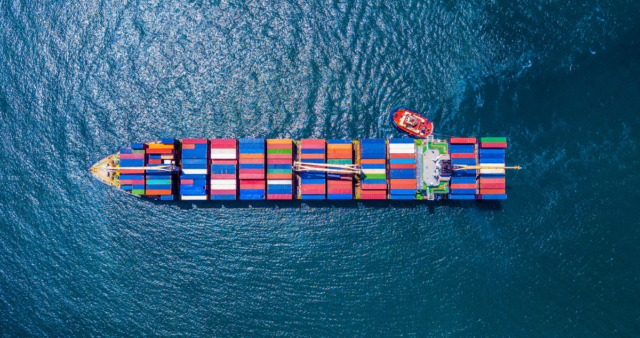
New Zealand has lost its last New Zealand-flagged, New Zealand-crewed container ship. PHOTOS: GETTY IMAGES
New Zealand’s last scheduled coastal container freighter has made its last run. This time it isn’t coming back.
Swire Shipping has confirmed the closure of its Pacifica coastal service, telling customers on 9 July 2026 that it could not find a sustainable pathway to keep the service running. The Moana Chief, Pacifica’s remaining 1,740 TEU vessel, made her final coastal voyage in late July, departing Auckland on 23 July and arriving in Lyttelton on 26 July. What had originally been flagged as a pause for mandatory drydocking has now been confirmed as a permanent withdrawal. New Zealand has lost its last New Zealand-flagged, New Zealand-crewed container ship.
To understand why this matters, it helps to look at how Pacifica got here. The service, operated under Swire Shipping’s New Zealand arm, has run coastal freight for close to 40 years. It was the last New Zealand-flagged options for moving containers between our own ports rather than trucking or railing them the length of the country. Until 2024, Pacifica ran two vessels: the Moana Chief and the Takutai Chief, together offering a 3.5-day service frequency between Auckland, Lyttelton, and Marsden Point. That two-ship operation was underpinned partly by a roughly $10 million government subsidy introduced in 2022 to bolster coastal shipping, alongside support for several other operators. When that subsidy ended and reduced feeder volumes from international shipping lines bit into the economics, the Takutai Chief was withdrawn in August 2024, taking 12 maritime jobs with it and leaving the Moana Chief running solo.
It’s not just Pacifica that’s struggled. Maersk’s competing Coastal Connect service, which ran two New Zealand-crewed ships and received no government subsidy, was withdrawn in 2023. Two different operators, two different funding models, the same result. That pattern suggests the problem isn’t one company’s cost structure; it’s the underlying economics of coastal shipping in New Zealand.
Swire Shipping country manager Jan Hintz has pointed to reduced market demand, port constraints, and an inconsistent regulatory landscape as ongoing challenges. The company says it explored options to keep the service running but couldn’t secure replacement tonnage given a tight global shipping market and elevated charter rates, and consultation with seafarers and shore-based staff has now concluded alongside the confirmed closure.
Industry reaction has been sharp. Maritime Union of New Zealand (MUNZ) national secretary Carl Findlay called the withdrawal “a devastating blow, not just to the skilled Kiwi seafarers who face redundancy, but to our entire island nation”. He linked it to decades of transport deregulation and government indifference to coastal shipping as strategic infrastructure: “New Zealand is an island nation that relies on sea transport to move freight, yet our ‘blue highway’ has been left to rot.” Findlay warned the loss leaves supply chain decisions in the hands of overseas operators with no stake in New Zealand: “Our absolute reliance on foreign-flagged, foreign-crewed vessels means that decisions about New Zealand’s supply chain security are now made entirely in overseas boardrooms with zero loyalty to our country.”
Findlay has also directed criticism at KiwiRail, calling it “a disgrace” that the taxpayer-owned entity has chosen to outsource domestic freight movement to foreign vessels operated by international lines such as CMA CGM and ANL, rather than supporting local coastal shipping capacity. That’s a pointed claim, and one CILT members with rail and coastal shipping interests will likely have views on. MUNZ is pushing for an amendment to Section 198 of the Maritime Transport Act 1994, which currently allows international vessels to carry domestic cargo without restriction, arguing New Zealand should return to rules that prioritise New Zealand-flagged and New Zealand-crewed vessels for domestic port-to-port trade.
For CILT members, the real question isn’t the fate of one ship. It’s whether New Zealand retains any dedicated coastal shipping option at all, and what happens to the freight that currently moves by sea if it doesn’t. Coastal shipping has always been a relatively minor share of New Zealand’s total freight task compared with road and rail. But for certain routes and certain freight types, it’s the only viable third mode: it reduces pressure on roads, offers a lower-emissions alternative, and provides resilience if road or rail corridors are disrupted, as they regularly are around Cook Strait and the lower North Island. Losing that option, even partially, pushes more freight onto already-stretched road and rail corridors, with knock-on effects for congestion, emissions, and resilience planning that the sector will be dealing with for years, not months.
There’s also a policy dimension members should keep an eye on. Coastal shipping has been the subject of periodic government attention for years (subsidies, reviews, and various “coastal shipping strategy” documents have come and gone) without a durable answer to the underlying economics. The pattern with both Pacifica and Maersk’s Coastal Connect suggests subsidy alone doesn’t fix the problem. A longer-term policy response would need to address the structural cost disadvantages coastal shipping faces against road and rail: port charges, crewing costs on New Zealand-flagged vessels, and the relatively small scale of the domestic freight task compared with the fixed costs of running a dedicated coastal fleet. Findlay’s call for cargo-preference legislation is one possible answer, but it’s a contested one. Mandating New Zealand-flagged vessels for domestic cargo would likely raise freight costs in the short term, even if it rebuilds long-term capacity. Members with a stake on either side of that trade-off, whether as shippers, forwarders, or port operators, should expect this to be a live policy conversation for months to come, regardless of whether Pacifica’s exit prompts any government response.