Where the parties stand on transport
New Zealand goes to the polls on 7 November. Transport and freight policy rarely leads the campaign, but it shapes almost everything New Zealanders do day to day: how infrastructure gets funded, how freight moves between road, rail, and coastal shipping, and how the regulatory environment operators work under is set.
Ahead of the election, we invited every parliamentary party to set out their transport vision directly to our readers, in their own words. National, Labour, and the Greens took up the invitation. We’ve run their submissions unedited and side by side over the following pages, so you can compare where each stands on land transport funding, freight and supply chain resilience, infrastructure prioritisation, and the regulatory settings operators work under.
New Zealand First was also invited but did not submit by the deadline.
Hon Chris Bishop, National Party Transport Spokesperson
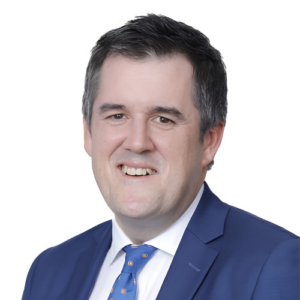
New Zealand’s economy depends on a transport system that works. For the freight and logistics sector, that is not an abstract policy goal. It means roads that are maintained, ports and rail links that can be relied on, sensible regulation, and a clear pipeline of infrastructure so businesses can plan and invest with confidence.
Over the past three years, the Government has put a much stronger focus on those fundamentals. If National is re-elected, our commitment to delivery will continue through continued improved maintenance, more disciplined investment, a more sustainable funding system, stronger freight resilience and rules that support productivity rather than getting in the way of it.
One of the biggest challenges is how we pay for the land transport system.
New Zealand has traditionally operated on a user-pays principle, with Fuel Excise Duty (FED) and Road User Charges (RUC) flowing into the National Land Transport Fund, but the balance has shifted. FED and RUC have not increased since 2020, fuel excise has fallen by around 21 per cent in real terms, and Crown funding now makes up 39 per cent of the current National Land Transport Programme.
GPS 2024 provided for FED and equivalent RUC increases from 2027. However, as we have signalled for some time, National considers a delay appropriate following the recent fuel crisis. Cabinet has agreed to cancel the FED and RUC increases scheduled for 2027 and instead proceed with five-cent-per-litre increases every six months from 1 January 2028 for two years, before slowing to annual five-cent-per-litre increases from 1 January 2030.
Meanwhile, across the aisle, Labour has promised to cancel all FED and RUC increases for three years if they win the election, while simultaneously promising $65 million a year for public transport fare caps from the same fund.
Labour says it will cover the difference by “scaling” transport projects – in other words, projects will be delayed or cancelled. After spending the last term calling for greater infrastructure certainty and bipartisanship, Labour is now putting that certainty at risk without saying which projects would go.
A major reduction in revenue for the Land Transport Fund has consequences for road maintenance and pothole prevention, resilience projects, local road improvements and public transport, as well as the thousands of jobs supported by that work.
National will take a fiscally responsible approach to FED and RUC that recognises cost pressures on motorists without blowing a hole in the transport programme or undermining New Zealand’s infrastructure pipeline.
We also acknowledge that the longer-term answer cannot simply be to continue putting more tax on every litre of petrol. We need a funding system that better reflects how people actually use the network, and that gives us more tools to pay for major investments.
That is why we are progressing the transition towards electronic road user charges for the whole vehicle fleet, so that over time vehicles contribute according to distance and weight rather than the type of fuel they use.
We are also advancing time-of-use charging, greater use of tolling and Infrastructure Funding and Financing Act levies where they make sense. These tools will not replace the National Land Transport Fund, but they can take pressure off it and help bring forward projects where there is a clear group of users or beneficiaries.
At the same time, we have to get much better at looking after what we already own.
Maintenance and renewals were allowed to fall behind for far too long. We created a dedicated $5.5 billion Pothole Prevention activity class in the 2024–27 National Land Transport Programme and put tougher performance requirements on state highway maintenance contractors. Around 98 per cent of identified state highway potholes are now being repaired within 24 hours each month.
That matters to every road user, but particularly to freight operators. Poor road surfaces damage vehicles, increase operating costs and make journey times less reliable. Maintenance is not the less exciting cousin of new infrastructure, but rather one of the most important investments government can make.
We are also building to address our infrastructure deficit, with a credible plan that goes deeper than a list of projects.
Ōtaki to north of Levin, the Hawke’s Bay Expressway, Takitimu North Link Stage 1 and SH29 Tauriko West are under construction. Work on Warkworth to Te Hana, the first stage of the Northland Expressway, is due to begin by the end of this year, and Cambridge to Piarere is expected to start in early 2027. By early next year, six Roads of National Significance will be under construction.
In the longer-term, the independent New Zealand Infrastructure Commission’s National Infrastructure Plan has given the country a 30-year view of how we should plan, fund, maintain and deliver infrastructure. The Government has supported all 16 of its recommendations in full or in part.
That includes stronger asset management, better independent assurance and a more disciplined approach to project selection. We have transferred central government infrastructure assurance from Treasury to the Infrastructure Commission, and I have asked the Commission to report on why major transport projects cost so much in New Zealand compared with earlier projects here and with comparable countries overseas.
We need to be prepared to ask hard questions before committing billions of dollars: is the project needed now, does demand justify it, is there a lower-cost option, is it deliverable, and does it represent value for money?
NZTA’s Major Transport Projects Pipeline is part of the same approach. The sector should be able to see what is coming, in what order, and with a realistic pathway to funding and delivery.
Freight resilience is another core part of that picture.
Around 300 million tonnes of freight move around New Zealand each year. Road will continue to carry the majority of that task, but road, rail, ports and coastal shipping all have a role in a resilient national system.
We reinstated the National Freight Demand Study and established the Freight Advisory Council so decisions are informed by current data and the people who operate supply chains every day. Budget 2026 also included $400 million for state highway resilience work on vulnerable routes around the country.
Rail needs to be reliable and properly maintained where it supports productive freight movements. Coastal shipping provides another option when roads or other parts of the network are disrupted. Ports are nationally important infrastructure, and the road and rail connections into them need to be treated as part of the same freight system rather than in isolation.
Government also has a responsibility not to tie operators up in rules that no longer make sense.
Our Land Transport Rules Reform programme is modernising a system that has accumulated unnecessary complexity over many years. For freight operators, that includes simplifying heavy-vehicle permitting, reviewing licence weight thresholds, making better use of digital documents and removing obsolete requirements that add cost without improving safety.
The test should be straightforward: rules should manage real risks and support safety, but where they impose cost or delay for no good reason, they should change.
There is still a lot to do. The next National-led Government will need to confront the funding gap in land transport, keep bearing down on infrastructure costs, protect maintenance and renewals, and be more disciplined about which major projects proceed and when.
My goal is a transport system where users and beneficiaries meet a fair share of the cost, the assets we already have are properly looked after, investment follows demand and value for money, and freight can move reliably around the country.
For New Zealand to grow, the transport system has to keep up. That means doing the basics of regulation, funding and maintenance well, making better long-term decisions, and getting on with building the infrastructure the country needs.
Julie Anne Genter, Green Party Transport Spokesperson

The Green Party has long campaigned for government to invest in modern, sustainable, and affordable transport options. This will make it easier and cheaper for people to safely get around our cities and regions.
Aotearoa was once joined up by buses and a reliable passenger rail system. Frequent, affordable and reliable public transport ran throughout our cities and towns.
After our rail network was sold off for private profit, it was returned to the people in disarray. Successive governments have failed to invest in our rail network or plan for the future in our urban areas. Our cities are now choked with cars, instead of flourishing with people.
People have been priced out of our central cities and now live in the outskirts, where they are poorly served by public transport and don’t have safe walking and biking infrastructure. The Coalition Government is also forcing public transport authorities to increase fares, through its “private share” policy, and has cancelled work to introduce frequent services to smaller towns, including Dunedin, Levin, and Hawke’s Bay. This has left so many with no option but to rely on cars to get around, adding to congestion, increasing their dependence on fossil fuels and making people vulnerable to oil price shocks.
The Green Party will invest in transport as a public good, so we all have real options to get around our communities, wherever we live. We’ll ease congestion with rapid buses and modern trams in our biggest cities. We will fund councils to build linked-up micro-mobility (bike, trike and scooter) networks and invest in rail to move people and freight. Giving people the freedom to take public transport or a bike instead of being forced into cars will provide them immediate relief where it counts — their wallets.
Coastal shipping deserves a bigger focus for freight as well, and there is an opportunity to publicly fund logistics and services, as opposed to just focusing on new infrastructure, to reduce the cost of moving goods around the country.
We will electrify our transport system: buses, trains, ferries, cars and trucks, bikes, cargo bikes and trikes all present a massive opportunity for our country to reduce costs, become more energy independent, and to help us achieve cleaner air and a stable climate.
The Green Party has a very successful track record of implementing practical policy for public good, with long term benefits. We campaigned for the Northern Busway, the electrification of Auckland’s rail network, and the transformational City Rail Link. We campaigned to save the Auckland to Wellington passenger train services, and KiwiRail’s electric locomotives.
From 2017-2020 as a confidence and supply partner to the Labour-NZ First coalition government, the Green Party delivered the evidence-based Road to Zero road safety strategy and action plan, spearheaded the Clean Car Discount and Standards which massively increased the fuel efficiency of vehicles being imported to New Zealand, and increased the funding in the Government Policy Statement on Land Transport for local road and state highway maintenance and renewals. We campaigned for more affordable public transport fares for everyone, and the Community Connect card, which targets much reduced public transport fares for those on benefits and low incomes. Over the years, we have also won an exemption for public transport and bikes, scooters and electric-assist versions from Fringe Benefit Tax, which is now resulting in employers being able to enable their employees to save money when they use greener transport modes.
The Green Party has criticised both the Coalition Government (National, ACT and NZ First) and the Labour Party for kicking the can down the road on transport funding by repeatedly delaying fuel tax rises that are needed for the transport budget to keep up with inflation. We also do not support the unaffordable promises made by the National Party to continue building new four lane expressways, at the expense of maintaining and renewing our entire road network and improving safety and capacity in more targeted means. We fully support the recommendations in the National Infrastructure Plan, including restoring a more user-pays approach to funding our road network so that Crown funding can be used for our public health and energy infrastructure.
Our plan
- Transform public transport networks, including building mass rapid transit in Auckland, Wellington and Christchurch, and provide comprehensive bus lanes in all cities.
- Invest in nationwide rapid rail for passengers and freight to connect regions and major cities and contribute to economic development and decarbonisation.
- Introduce targeted subsidies and zero interest loans for e-cargo bikes. Introduce e-bike sharing schemes in community hubs to allow more families to save on transport costs.
- Fund affordable, reliable, interregional rural bus services, and on-demand public transport, including by-Māori for-Māori public transport to serve kōhanga reo and rural schools.
- Extend Community Connect to provide free fares for students and apprentices, community service card holders, everyone under 18, and all Total Mobility card holders.
- Enable the provision of publicly owned public transport services instead of being limited to the private contracting of services.
- Create safe walking and biking routes to all community hubs, including schools, through the building of more bike lanes and safe crossings, and lowering speed limits near schools.
- Implement a phase-out date for the importation of fossil-fuel powered vehicles, build more electric vehicle charging stations, remove regulatory barriers to EV car-sharing and re-introduce incentives for EV uptake, like the very successful Clean Car Discount, or alternatively, removing Fringe Benefit Tax from EVs for a period of five years.
Tangi Utikere, Labour Party Transport Spokesperson

In 2021, the Labour Government ordered two rail enabled Cook Strait ferries. Nicola Willis cancelled them in a knee-jerk decision in late 2023, and a shipyard is now building a replacement designed to a standard described as ‘Minimum Viable Product’. That phrase, and its implications for the quality of the programme New Zealanders are going to receive, deserves more scrutiny, because the Cook Strait is the joint on which New Zealand’s national supply chain hinges. It also sums up this government’s approach to infrastructure and supply chains more generally.
Cancellation costs and the maintenance needed to keep an ageing fleet in service have been put at over $1 billion and counting, the replacement programme now runs to almost $2 billion, and the ships will be smaller than the ones that Nicola Willis cancelled. Raising the Picton rail yard, which the cancelled programme provided for, has been ruled out as unviable for financial reasons, and engineering advice indicates that towards the end of the working lives of the new wharves and linkspans – assets expected to last 60 and 30 years respectively – extreme high tides could stop ferries loading and unloading passengers, vehicles and rail freight altogether. The sea level assumptions underpinning that design sit at the conservative end of the accepted range, and the implications for New Zealand’s productivity could be dire.
With that in mind, it is clear that this government has not delivered savings, but a deferral. The bill for their procrastination will fall on freight operators and their customers decades from now, when remediating a wharf that cannot be worked will cost a great deal more than raising a rail yard would have while the ground was already open. Infrastructure of this significance needs to be designed for the conditions the country will face across the life of the asset, not the conditions that make the next Budget line appear more manageable.
Ministers’ handling of the programme has only made things worse. Questions about scope, cost, delay and risk on a publicly funded strategic asset have been met with redactions and commercial sensitivity, while the readiness dates that have surfaced are already well behind schedule, with completion unlikely to be seen this decade as promised. If iReX hadn’t been cancelled, the bigger, better ferries would have arrived by now.
‘Minimum Viable Product’ is a philosophy rather than an isolated decision, and it is the same philosophy that builds a pipeline in three-year increments. By contrast, Labour is committed to projects that are already contracted, that are underway and are funded – we won’t abandon a plan merely because we didn’t design it, and we will work with what we inherit.
More scrutiny should fall on projects announced without a completed business case, without confirmed funding, or with benefit cost ratios that do not survive contact with their own numbers. Seventeen Roads of National Significance were promised in 2023 and almost none of them have been funded, with the vast majority having been effectively cancelled – while hundreds of millions of dollars have been poured into planning and land acquisition. Cost benefit analysis and independent assurance should mean something in practice, and a pipeline capable of surviving a change of government is worth more to this sector than any single project sitting on it.
None of this can be funded by charges households cannot carry, which is why Labour has committed to no increases in fuel excise duty across the next term. Fuel is not a luxury, and while global oil prices sit outside the control of any government, the tax added at the pump is a choice. It is also a flat charge on every litre that takes no account of what the person buying it earns. A night shift worker running a 20-year-old car pays the same cents per litre as someone in a new hybrid, burns more litres covering the same distance, and is the less likely of the two to have any alternative. Households on the lowest incomes already spend a far larger share of what they earn simply getting around, so a flat increase takes its biggest bite from those least able to absorb it. The Government has cancelled the 12 cents legislated for January, but replaced it with increases from 2028 building to 20 cents by the end of the decade, bridged by a Crown top up of around $1.5 billion that is mostly yet to be sourced.
Labour’s public transport fare cap works on the same principle. From 1 July 2027 the most anyone pays in a week on buses and trains will be $20 in Auckland, Wellington and Christchurch, and $10 elsewhere, at a cost of about $65 million a year, less than one per cent of the National Land Transport Fund. Every person on a bus is a car not sitting in front of a truck transporting goods.
Confidence in the regulatory system matters just as much, and it is under strain. NZTA is investigating allegations of bribery, corruption and fraud across the driver licensing system, testing officers have been suspended or stood down, hundreds of drivers have been required to re-sit, hundreds of fraudulent commercial licences have been identified, and heavy vehicle testing is among the areas most affected. An industry whose standing rests on a heavy vehicle licence meaning exactly what it says cannot afford doubt on that point, and Labour will follow those investigations to their conclusion and act on the findings in government. Alongside it sits the ordinary barrier of cost and difficulty in getting and holding a licence, which weighs heaviest on the workforce the sector most needs to recruit.
When New Zealanders vote on 7 November, Labour is asking for the opportunity to run an integrated transport system, sized honestly against what it can pay for, funded without pushing charges onto the households least able to meet them, and built for the conditions the country will face. We cannot afford three more years of needless and destructive transport and infrastructure policies that prioritise short term political goals over New Zealand’s long-term interests.